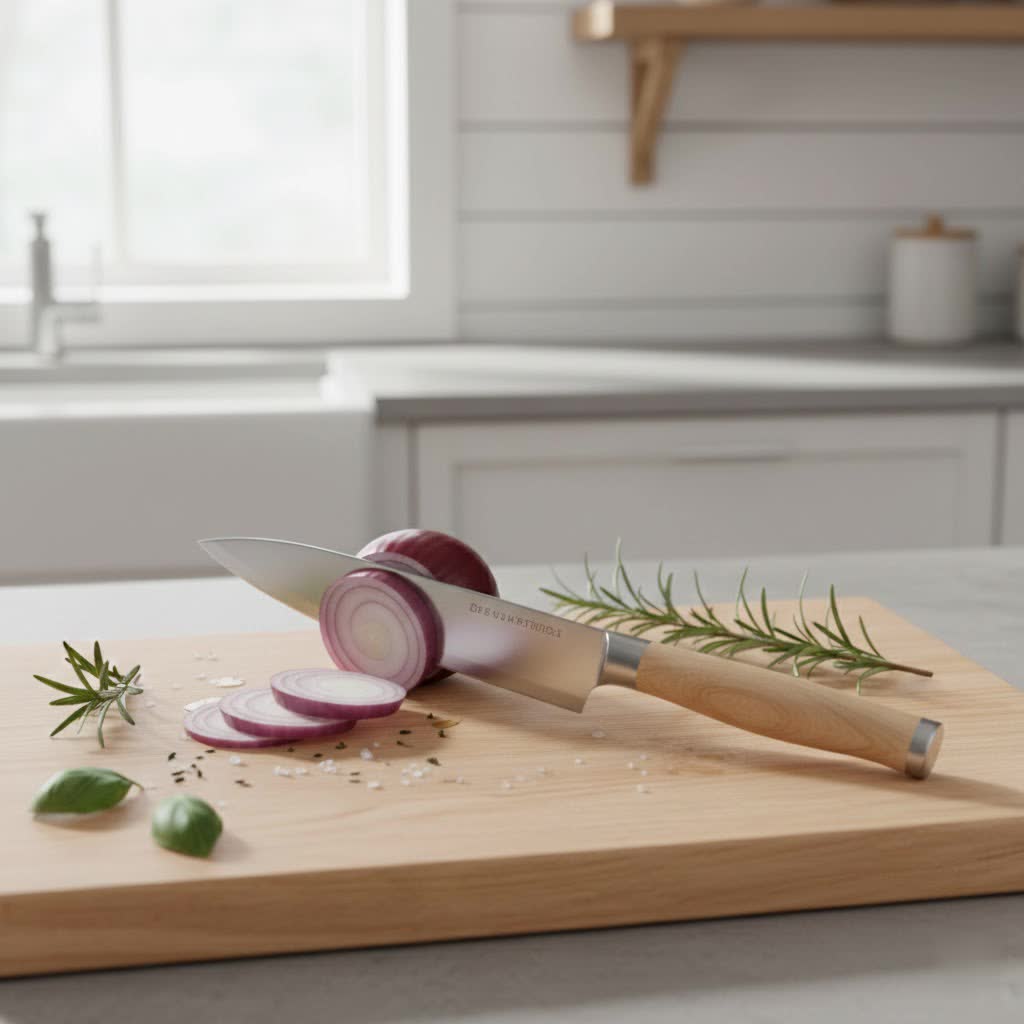
In the culinary world, few attributes are as revered as a knife’s sharpness. For many chefs and home cooks, the quest for the ultimate edge is a continuous journey, promising effortless preparation and superior results. Among the contenders for the title of “sharpest,” Mac Knife Series frequently stands out. This review delves into what makes Mac knives exceptional, putting their renowned sharpness to the test and examining their performance, edge retention, and overall value in a professional or home kitchen.
Unleashing the Edge: What Makes Mac Knives So Sharp?
Mac knives are engineered with a meticulous approach that combines traditional Japanese blade crafting with modern metallurgical advancements. Their reputation for extraordinary sharpness right out of the box isn’t accidental; it’s the result of carefully chosen materials and precise manufacturing techniques.
Central to their cutting prowess is the unique blade geometry. Most Mac knives feature a thin blade profile coupled with a finely ground, double-beveled edge, typically sharpened to an acute 15-degree angle. This narrower angle, compared to the wider 20-25 degree angles found in many European knives, allows the blade to glide through food with minimal resistance. Furthermore, the V-taper from the spine to the edge contributes to an exceedingly fine and agile cutting instrument.
The steel composition is another critical factor. Mac knives primarily utilize proprietary high-carbon molybdenum-vanadium steel. This specific alloy is chosen for its excellent balance of properties: it’s hard enough to take and hold a very fine edge (often rated around 60-61 HRC, though some tests show variations), yet it maintains a degree of toughness and corrosion resistance. This makes it easier to maintain than some more reactive carbon steels, while still delivering superior edge retention.
The Sharpest Edge Test: Real-World Performance
When put to the test, Mac knives consistently live up to their reputation for sharpness. Users often describe the cutting experience as “insanely sharp” and “like no other.” The Mac Professional Series MTH-80 chef’s knife, in particular, is frequently cited for its exceptional performance.
In practical culinary tasks, Mac knives excel at precision cutting. They effortlessly create razor-thin slices of ripe tomatoes, delicate chiffonades of herbs, and the smallest, most uniform onion dice. The fine edge makes it possible to work with remarkable control, transforming firm vegetables into transparent sheets and tender proteins into perfectly even portions. Some describe the experience as wielding a “vegetable scalpel” due to the precision and minimal effort required. This precision is not just about aesthetics; it means less cellular damage to food, potentially preserving flavor and texture.
The balance of these knives further enhances their cutting performance. Many Mac models are engineered with a perfectly centered balance point, which reduces hand fatigue during prolonged use and contributes to superior control and maneuverability. This combination of an ultra-sharp edge and excellent balance makes tasks that might be challenging with a lesser knife feel intuitive and effortless.
Edge Retention: How Long Does the Sharpness Last?
A knife’s true value isn’t just in its initial sharpness, but how long it maintains that keen edge. Mac knives are generally praised for their impressive edge retention. Thanks to the high-carbon molybdenum-vanadium steel and precise heat treatment, many users report that Mac knives stay sharp longer than many comparable brands.
However, “edge retention” is a nuanced term, and experience can vary. While some report “impeccable” edge retention, others suggest that while the initial sharpness is outstanding, the fine edge might require more frequent honing or maintenance compared to some heavier, more robust Western-style knives to keep it at peak performance. This doesn’t necessarily mean the edge dulls quickly, but rather that minor realignments with a honing rod are beneficial to prevent the microscopic folding of the edge that eventually leads to perceived dullness. Regular, light maintenance can significantly extend the period between full sharpenings.
Durability and Care: Preserving the Delicate Edge
The trade-off for such an incredibly sharp and fine edge is a degree of delicacy. Mac knives are powerful cutting tools, but they require mindful use and care to prevent damage.
Limitations: The ultra-fine edge and hardened steel mean that Mac knives are not designed for heavy-duty tasks that involve significant force or impact. It is strongly advised to avoid cutting bones, frozen foods, hard squashes, or dense cheeses. Applying excessive force or twisting the blade can lead to chipping of the delicate edge or even tip breakage. These knives are precision instruments meant for slicing, dicing, and chopping, not prying or cleaving.
Maintenance Best Practices:
- Handwashing: Always wash your Mac knife by hand immediately after use with warm water and mild dish soap.
- Immediate Drying: Crucially, dry the knife thoroughly with a soft cloth immediately after washing. Leaving it to air dry or in a damp environment can lead to staining or minor corrosion, even with stainless alloys.
- Proper Storage: Store your knives safely to protect the edge and prevent accidental injury. Magnetic strips, wooden knife blocks, or in-drawer knife organizers are excellent options. Avoid tossing knives into a drawer where they can jostle against other utensils and damage the edge.
- Sharpening: For regular maintenance, a smooth ceramic honing rod can help realign the microscopic edge. For true sharpening, water stones (in the 1000–6000 grit range) are recommended to maintain the precise angle and fine edge. Avoid aggressive pull-through sharpeners, which can damage the blade geometry and lead to excessive material removal.
Mac Knife Series Overview: Beyond the MTH-80
While the MTH-80 from the Professional Series is perhaps the most widely recognized for its sharpness and performance, Mac offers several other distinguished series, each tailored to different preferences and uses:
- Professional Series: Known for its balanced design, comfortable Pakkawood handles, and thin blades, ideal for chefs.
- Superior Series: Often featuring molybdenum-vanadium steel and a 15-degree edge, offering excellent wear resistance and edge retention.
- Molybdenum Steel Series: Typically includes single-bevel knives with dark Pakkawood handles, focusing on lasting sharpness.
- Sub-Zero Steel Series: Boasts molybdenum steel tempered at sub-zero temperatures, enhancing edge retention even further while remaining stain-resistant and easy to sharpen.
- HO-Series: Represents the pinnacle of traditional Japanese craftsmanship, hand-forged from Yasuki Shirogami white steel, with laminated blades that hold an extremely fine edge and often feature Japanese magnolia wood handles.
Each series maintains Mac’s core commitment to sharpness and quality, albeit with variations in aesthetics, blade profiles, and specific performance characteristics.
Comparing the Edge: Mac vs. The Competition
When stacked against other premium knives, Mac holds its own, particularly in the sharpness department.
- Vs. Japanese Rivals (e.g., Shun, Global): Mac knives often offer a comparable, if not superior, out-of-the-box sharpness. While brands like Shun also feature thin Japanese blades and sharp edges, Mac’s specific V-grind and steel composition are frequently cited for a uniquely smooth cutting experience. Global knives, with their integrated handle design, offer a different ergonomic feel, but Mac’s cutting precision is consistently lauded.
- Vs. Western Rivals (e.g., Wüsthof, Zwilling J.A. Henckels): German knives typically have a thicker blade, heavier feel, and a wider edge angle (around 20-25 degrees), making them more durable for heavy-duty tasks but less initially sharp. Mac knives are noticeably lighter and more agile, providing a significant “wow” factor in sharpness that often surpasses their Western counterparts for fine work.
Mac’s unique blend of Japanese blade characteristics with often Western-style, comfortable handles creates a hybrid that many find ideal. They offer the surgical precision of Japanese blades without the extreme fragility or maintenance demands of some ultra-hard, reactive Japanese steels.
Is a Mac Knife Right for You? Pros and Cons
Choosing the right knife is a personal decision, but understanding the strengths and weaknesses of Mac knives can help you decide.
Pros:
- Unrivaled Out-of-the-Box Sharpness: Consistently rated as one of the sharpest knives available.
- Exceptional Precision: Ideal for delicate cuts, fine dicing, and intricate culinary tasks.
- Excellent Balance and Ergonomics: Reduces fatigue, offering superior control and comfort during extended use.
- Good Edge Retention: Holds its sharp edge well with proper maintenance.
- Lightweight and Agile: Contributes to ease of use and reduced strain.
- Corrosion Resistance: Molybdenum-vanadium steel is relatively easy to maintain.
Cons:
- Delicate Edge: Prone to chipping or damage if used on hard materials (bones, frozen foods).
- Handle Size: Some users with larger hands might find certain handles (e.g., on the MTH-80) a bit short.
- Price Point: While offering excellent value for performance, Mac knives are an investment, and some newer brands might offer competitive performance at a slightly lower price.
- Maintenance Requirements: Demands handwashing, immediate drying, and proper sharpening techniques. Not suitable for dishwashers or aggressive sharpeners.
Conclusion
The Mac Knife Series, particularly models like the MTH-80, consistently delivers on its promise of an exceptionally sharp edge. It’s a tool that transforms the mundane act of cutting into a precise, almost surgical experience, making it a favorite among culinary professionals and discerning home cooks alike. While its delicate edge demands respect and proper care, the unrivaled sharpness, precision, and balance it offers make it an invaluable asset in any kitchen focused on quality and efficiency. If you are seeking a knife that pushes the boundaries of sharpness and elevates your culinary craft, a Mac knife is undoubtedly worth considering. Are you ready to experience the difference a truly sharp edge can make in your daily cooking?
Frequently Asked Questions
How often should I sharpen my Mac knife?
|
Our Picks for the Best Kitchen knife set in 2026
As an Amazon Associate I earn from qualifying purchases.
|
||
| Num | Product | Action |
|---|---|---|
| 1 | Knife Set, Astercook 15 Pieces Knife Sets for Kitchen with Block, Dishwasher Safe Kitchen Knife Set with Built in Sharpener Block, German Stainless Steel Knife Block Set, Valentine's Gift |

|
| 2 | XYJ Authentic Since 1986, Kitchen Knife Set with Wooden Magnetic Knife Block, Scissors, Honing Steel, Peeler, Gloves, Vegetable Slicer Cooking Bread Butcher Chef Knives |
|
| 3 | 16 Piece Kitchen Knife Set with Block & Cutting Board, German Stainless Steel Knife Set with Heat-Sealed Over-molded Handles, Dishwasher Safe & Anti-Flaking Non-Stick Coating, Black |
|
| 4 | Amazon Basics 14-Piece High Carbon Stainless Steel Kitchen Knife Set with Full Tang Construction, Ergonomic Handles, Sharpener and Pinewood Block, Black |
|
| 5 | Astercook Knife Set, 13 Pieces Kitchen Knives Set with Healthy Anti-Rust Coating, Dishwasher Safe, Stainless Steel Chef Knife Sets with 6 Blade Guards, Perfect Holiday Gifts for Kitchen |
|
| 6 | Ninja K32017 Foodi NeverDull Premium Knife System, 17 Piece Knife Block Set with Built-in Sharpener, German Stainless Steel Knives, Black |
|
| 7 | ZWILLING Pro RCF 5-pc Magnetic Knife Block Set, Natural |
|
| 8 | HENCKELS Statement 15-Piece Knife Set, Natural Wood Knife Block Set, Razor-Sharp Kitchen Knives, Lightweight, Dishwasher Safe |
|
| 9 | Cuisinart 15-Piece Knife Set with Block, High Carbon Stainless Steel, Forged Triple Rivet, White, C77WTR-15P |
|
| 10 | Knife Set, Astercook 21 Pieces Knife Sets for Kitchen with Block, Dishwasher Safe Kitchen Knife Set with Built-in Sharpener, German Stainless Steel Black Knife Block Set |
|
For optimal performance, regularly hone your Mac knife with a ceramic rod before each use to realign the edge. True sharpening on water stones (e.g., 1000-grit to 6000-grit) typically needs to be done every 6-12 months, depending on usage frequency and cutting board material.
Can Mac knives cut through bones?
No, Mac knives are designed for precision slicing and dicing, not for cutting through bones, frozen foods, or other extremely hard materials. Attempting to do so can chip or damage the fine, delicate edge. For heavy-duty tasks, a cleaver or a robust Western-style knife is more appropriate.
What kind of steel are Mac knives made from?
Mac knives are primarily made from a proprietary high-carbon molybdenum-vanadium steel. This alloy provides an excellent balance of high hardness (around 60-61 HRC), good edge retention, and resistance to corrosion, making them both sharp and relatively easy to maintain.
Are Mac knives good for beginners?
While Mac knives offer exceptional performance, their ultra-sharp and delicate edges require careful handling and proper technique. Beginners who are still developing their knife skills might find the sharpness almost “too sharp” initially and need to adjust their force to avoid digging into cutting boards or damaging the edge. However, for those committed to learning good knife habits, they can be an excellent investment that greatly enhances the cooking experience.